How Healing Changes the Way Family Gatherings Feel and How to Prepare for Them
You did the work.
You went to therapy, or coaching, or you spent years quietly unlearning the things that were holding you back. You set boundaries you were never taught to set. You learned your triggers, your patterns, your worth. You built a version of yourself that feels solid and grounded and real in a way that the old version never quite did.
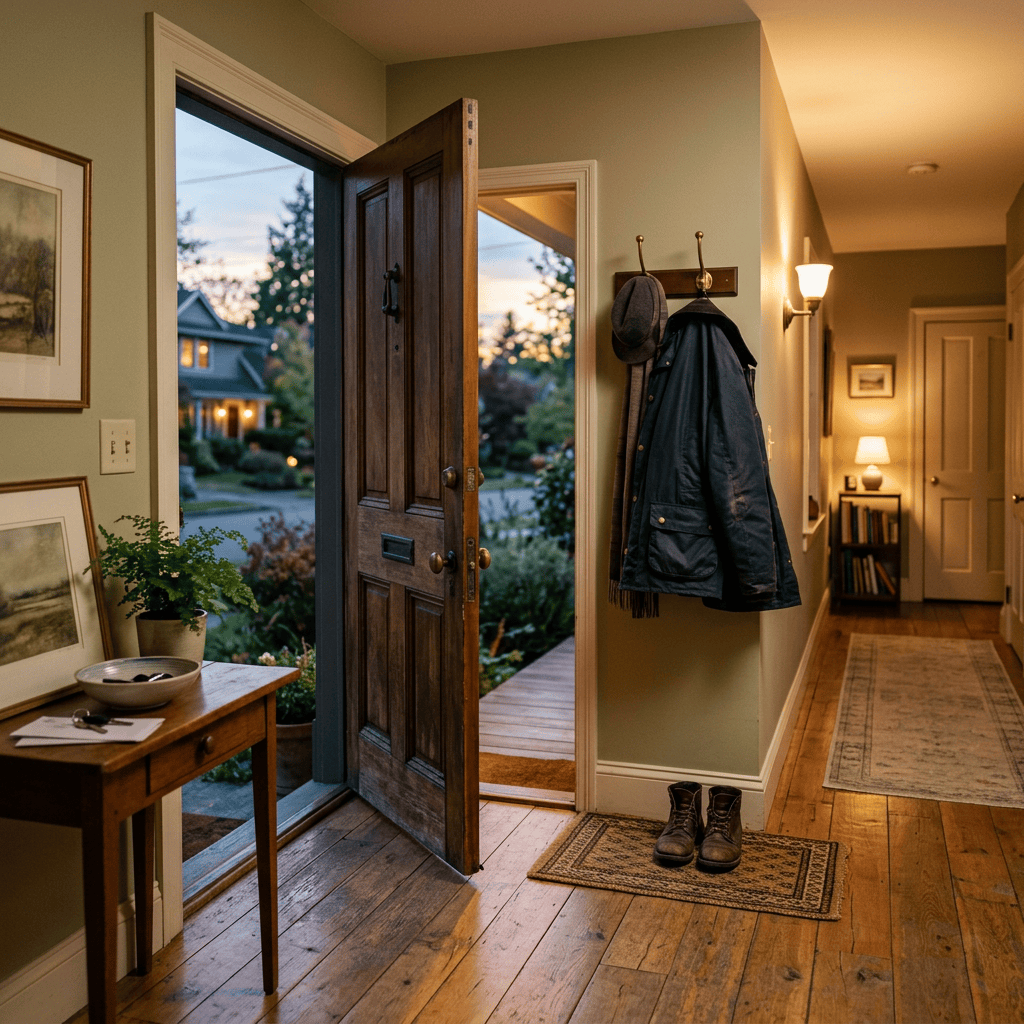
And then the holidays arrive. Or a birthday. Or a family dinner. And you get in the car, or on the plane, or you simply pull into that familiar driveway, and something shifts.
The person who walks through that door is not the same person who used to live there. But everything inside often looks and feels and sounds exactly the same. The same dynamics. The same comments. The same unspoken rules. The same roles everyone has been playing for decades. And suddenly the grounded, healed, boundaried version of you is sitting at a table where none of that growth is recognized, acknowledged, or particularly welcome.
Nobody warned you that going home would feel this disorienting. And nobody told you how to prepare for it.
That is what today is about.
Why It Feels So Different Now
Before you healed, family gatherings had a rhythm you knew how to move to even if that rhythm was unhealthy. You knew your role. You knew what to absorb, what to overlook, what to laugh off, what to shrink yourself to accommodate. You were fluent in the unspoken language of your family system and you played your part without even thinking about it.
Healing disrupted all of that.
Now you notice things you used to tune out. The comment that was always meant to diminish dressed up as a joke. The family member whose anxiety fills every room and whose mood everyone quietly manages. The dynamic where one person’s comfort is always prioritized over everyone else’s. The way certain topics are never discussed and certain feelings are never named and certain truths have been quietly agreed upon never to be spoken.
You notice all of it now. And you cannot un-notice it.
This is not a problem with your healing. It is evidence that it worked. But it does create a new challenge that nobody who sells you the healing journey quite prepares you for. You now have to figure out how to be in a space that shaped your wounds while holding onto everything you built in the process of healing them.
The Roles We Were Given and the Ones We Are Releasing
Most families operate on a system of unspoken roles. There is the peacekeeper who smooths everything over. The strong one who never needs anything. The funny one who deflects tension with humor. The invisible one who learned that taking up less space meant less conflict. The fixer who makes everyone else’s problems their responsibility.
You probably know which one you were. And you probably spent a significant portion of your healing recognizing how much that role cost you.
The challenge of going home is that your family has not updated their cast list. They still expect you to play the part. And when you do not, when you refuse to smooth something over that should not be smoothed, when you decline to fix something that is not yours to fix, when you hold a boundary instead of shrinking, the system pushes back.
It is not always malicious. Most families are not consciously trying to undo your healing. They are simply operating from the same patterns they have always operated from, and your changed behavior disrupts an equilibrium that everyone, including people who were also hurt by it, has gotten used to.
Understanding this does not make it hurt less. But it does make it make sense. And when hard things make sense they become a little more navigable.
How to Prepare Before You Walk Through the Door
The work you do before the gathering is just as important as how you show up during it. Here is how to prepare yourself well.
Get clear on your non-negotiables. Before you arrive, decide what you are and are not willing to engage with this time. Not as a list of rules to enforce aggressively, but as a quiet internal commitment to yourself. You do not have to justify your non-negotiables to anyone. You simply need to know what they are before someone tests them.
Lower your expectations without lowering your standards. This is a delicate but important balance. Lowering your expectations means releasing the hope that this gathering will be the one where everything is different, where the difficult family member finally shows up differently, where old wounds get acknowledged and everyone suddenly sees you clearly. That hope, when it goes unmet, is one of the most painful parts of going home. Lower the expectation. Your standards for how you allow yourself to be treated remain exactly where you set them.
Plan your exit or your reset. Know in advance how long you are staying and give yourself permission to leave when you said you would. If you are staying overnight, identify a space or a time that is yours to recharge. A morning walk, a few minutes alone, a phone call with someone who knows and supports the real you. You need somewhere to put down the weight of navigating that environment before it accumulates into something overwhelming.
Have one grounding phrase ready. When something is said or done that would have triggered the old version of you, having a quiet internal phrase to come back to can make an enormous difference. Something as simple as that is their pattern, not my truth, or I am not who I used to be here. You do not need to say it out loud. You just need something to anchor you when the pull of old dynamics starts to feel strong.
How to Show Up While You Are There
Preparation gets you through the door. These practices help you stay grounded once you are inside.
You do not have to correct everything. This is one of the hardest lessons for people who have done significant personal work. You will notice things that are unhealthy, untrue, or hurtful. You do not have to address all of them. Choose your moments wisely. Some things deserve a response. Others are best released without comment. You are not responsible for educating your entire family at the dinner table.
Stay in your body. When family dynamics get tense, the nervous system responds before the mind does. Practice noticing when your body is tensing, when your breathing is getting shallow, when the old familiar anxiety of that space is starting to take hold. A slow breath, a moment of stillness, excusing yourself briefly to the bathroom, these are not avoidance. They are regulation. They are you staying connected to the grounded version of yourself instead of being pulled back into the reactive one.
Be the observer when you need to. There will be moments when the healthiest thing you can do is mentally step back and observe what is happening without being consumed by it. Watch the dynamics with the eyes of someone who understands them now rather than someone who is trapped inside them. This creates just enough distance to keep you from being swept back into patterns you have worked hard to leave.
Let some things be what they are. Not everything needs to be processed, confronted, or resolved at the gathering. Some family dynamics are decades in the making and they will not be shifted over one holiday meal. Give yourself permission to let some things simply exist without needing to fix or change them. Your job is not to heal your family. Your job is to stay true to yourself while you are with them.
After You Leave
What happens after the gathering matters just as much as what happens during it. Give yourself time and space to decompress without judgment. It is normal to feel a complicated mixture of love, grief, frustration, and tenderness after spending time in the place that shaped you. All of those feelings can be true at the same time.
Be gentle with yourself if you slipped back into an old pattern for a moment. Going home activates some of the oldest wiring in your nervous system and even the most healed person can find themselves responding from that old place occasionally. One moment of the old you does not undo everything you have built. Notice it, understand it, and come back to yourself.
Journal about it if you can. Talk to your therapist, your coach, or a trusted friend who gets it. Process what came up so it does not get carried quietly into the next week and the one after that.
You Are Allowed to Love Them and Still Need Distance
Here is the truth that a lot of healed people wrestle with quietly: you can love your family deeply and genuinely and still find that being around them requires significant energy to protect what you have built in yourself.
Both of those things are true at the same time and neither one cancels the other out.
Going home is different when you know better. It is more complicated, more emotionally layered, and sometimes more lonely than it was before, because now you see clearly what was always there. But it is also something else. It is evidence of how far you have come. Every time you walk back into that space and come out still holding onto yourself, still grounded in who you are and what you know and what you deserve, that is not a small thing.
That is you living proof that the work was worth it.
How do you prepare yourself for family gatherings after doing personal healing work? Share your strategies in the comments. This community is full of people navigating the exact same thing and your experience might be exactly what someone else needs today.




Leave a Reply