Nobody signs up for the pause.
It arrives uninvited, through a diagnosis, a breakup, a job that disappears, a loss that rearranges everything. Or sometimes it’s quieter than that. A morning you wake up and realize you’ve been going through the motions for so long you can’t remember the last time anything felt real. A moment where the life you built suddenly feels like it belongs to someone else.
However it arrives, the pause has a way of stopping you completely. And in a world that treats stillness like failure, that can feel like the worst thing that’s ever happened to you.
It might also be one of the most important.
What the pause is not
The pause is not punishment. It is not proof that you did something wrong, that you’re behind, that everyone else has it figured out and you somehow missed the memo.
It is not a detour from your life. It is not wasted time. It is not something to white-knuckle your way through as fast as possible so you can get back to the version of yourself that had it together.
That version of yourself, the one who was busy and productive and keeping all the plates spinning, is exactly who the pause came to interrupt.
What keeps us running
Most people don’t slow down by choice. Not because they’re shallow or unaware, but because moving fast serves a purpose. It keeps you from having to feel what’s underneath.
When you’re busy enough, you don’t have to think about whether you’re actually happy. You don’t have to sit with the grief you shelved three years ago, or the relationship that quietly drained you, or the career that looks impressive from the outside and feels hollow from the inside. Busyness is one of the most socially accepted ways to avoid yourself.
The pause removes that option.
And that’s terrifying. But it’s also the point.
What the pause is actually doing
When life forces you to stop, it’s not taking something away from you. It’s creating the only conditions under which certain things can finally surface.
The questions you’ve been too busy to ask. The feelings you’ve been too afraid to feel. The truths about what you actually want, versus what you thought you were supposed to want, that can only be heard in the quiet.
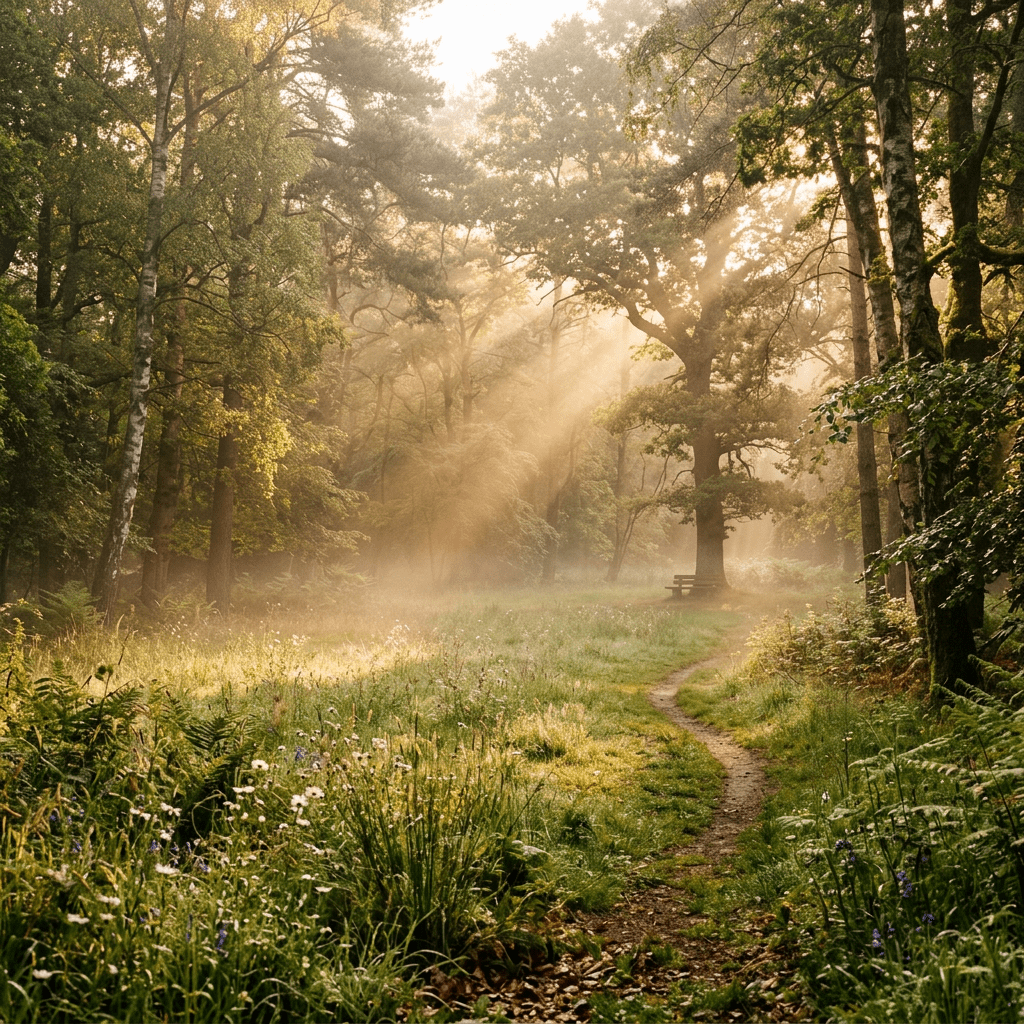
The pause is a clearing. And clearings are uncomfortable because there’s nowhere to hide. But they’re also where you finally get to see what’s actually there, what’s been there all along, underneath the noise.
This is where real self-knowledge lives. Not in the productivity, not in the achieving, not in the forward motion, but in the stillness that most people spend their whole lives running from.
The lessons the pause tends to carry
Every pause is personal. But there are patterns…. things that tend to surface when life slows you down whether you asked for it or not.
What actually matters, and what doesn’t. When the structure of your daily life falls away, what do you miss? What do you not miss at all, even though you thought you would? The pause has a way of sorting your priorities without asking for your input. Pay attention to what it reveals.
How you’ve been treating yourself. When you’re forced to stop performing and just be…. how do you feel about the person you’re left with? The pause often surfaces a complicated relationship with self-worth that the busyness was quietly covering. That’s not a comfortable discovery. It’s also a necessary one.
What you’ve been tolerating. Relationships that don’t fit anymore. Work that stopped meaning something. Versions of yourself you’ve been performing for other people’s comfort. When life stops you long enough, what you’ve been tolerating becomes impossible to ignore.
Who shows up. In the pause, the people who are genuinely in your corner tend to reveal themselves. So do the ones who were only there for the version of you that had something to offer. Both pieces of information are valuable. Neither is comfortable.
That you are more than what you produce. This might be the deepest lesson the pause carries, and the hardest for high-achievers to absorb. Your worth has never been in your output. It has never been in your title, your usefulness, your ability to keep showing up for everyone else. The pause strips all of that away and asks a quieter question: who are you when you’re not doing anything?
If you don’t have an answer yet, that’s okay. That’s what this time is for.
How to be in the pause
Not how to end it. Not how to speed through it. How to actually be in it, because the way you move through the pause determines what you take out the other side.
Let it be uncomfortable. The discomfort isn’t a sign you’re doing it wrong. It’s a sign you’re actually feeling it instead of outrunning it. Sit with it. Not forever, just long enough to hear what it’s saying.
Resist the urge to immediately rebuild. The instinct when everything falls apart is to start reconstructing as fast as possible, to prove to yourself and everyone else that you’re okay, that you’re resilient, that you can bounce back. Sometimes the most courageous thing is to not bounce. To let the rubble be rubble for a little while and really look at what was there.
Get curious instead of critical. The pause will invite a lot of self-judgment, what you should have done differently, what’s wrong with you, why this happened. Try swapping judgment for curiosity. Not “what did I do wrong?” but “what is this here to show me?”
Find the small things that feel true. You don’t have to rebuild everything at once. You don’t have to have a plan. But you can notice what feels like you, a conversation that lights something up, a morning that feels different, something small that reminds you who you are underneath all of it. Follow those things. They’re the breadcrumbs.
Let people in. The pause can be deeply isolating, especially if you’re someone who’s used to being the strong one, the capable one, the one who holds it together. Letting someone see you in the middle of it (not the cleaned-up version, but the actual middle) is one of the most healing things you can do.
What comes after
The pause always ends. Not on your timeline, and not always the way you planned, but it ends.
And what comes after is rarely a return to what was. It’s something different. Sometimes something smaller and quieter than what you had before. Sometimes something bigger and truer than you thought you were capable of building.
What comes after depends, in large part, on what you do with the pause while you’re in it. Whether you race through it or move through it. Whether you use it to numb or use it to see. Whether you let it break you open or just break you.
The pause is not the end of your story. It’s the space between chapters, and the space between chapters is where the real writing happens.
You don’t have to be okay right now. You just have to be here.
That’s enough.
The life you’re meant to live can’t be heard over the noise of the one you’ve been performing. Sometimes the pause isn’t taking something from you — it’s making room.



Leave a Reply