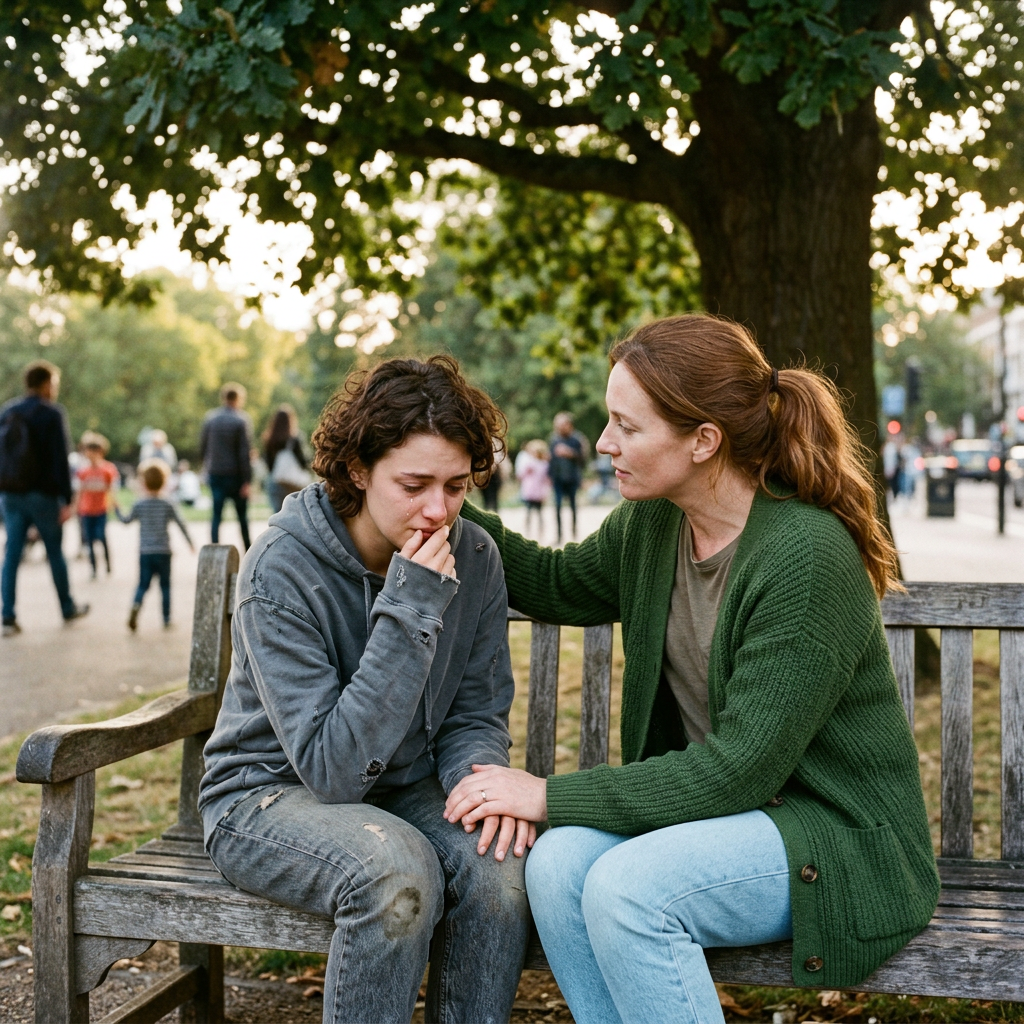
We have a complicated relationship with not being okay.
We’ll admit it in private, to the journal, to the 2am ceiling, to the one friend who’s seen us ugly cry. But in the light of day, there’s pressure. To be resilient. To be bouncing back. To have the lesson learned and the growth visible and the silver lining identified and the new chapter already underway.
Because somewhere along the way we absorbed the idea that healing is something you do efficiently. That grief has a reasonable timeline. That falling apart is acceptable for a little while, but then, enough. Get moving. Get better. Get on with it.
And so we rush. We perform recovery before it’s real. We say “I’m good” when we mean “I’m surviving.” We mistake motion for progress and busyness for healing and moving on for actually moving through.
And then we wonder why it keeps coming back.
What rushing the healing actually does
Here’s the thing about emotions that don’t get felt: they don’t disappear. They go underground.
Grief that gets bypassed becomes anxiety. Anger that gets swallowed becomes resentment. Sadness that gets performed away becomes a low-grade numbness that settles in and stays. The feelings don’t stop existing just because you decided you were done with them. They just stop being visible, to everyone else, and eventually to you.
Until they’re not. Until something small cracks the surface and everything you thought you were over comes flooding back with a force that seems completely disproportionate to whatever just triggered it. And then you think: why am I not over this yet? What is wrong with me?
Nothing is wrong with you. You just skipped a step. And the step doesn’t skip.
The pressure we put on ourselves
The cruelest part of rushing the healing is that we usually do it to ourselves.
Yes, the world sends messages. The culture is uncomfortable with prolonged sadness. People in your life get awkward when you’re still not okay three months later. There are bills to pay and jobs to get to and children who need you and a life that keeps moving regardless of whether you’re ready to move with it.
But most of the pressure comes from inside. The voice that says you should be further along by now. That says other people have been through worse and handled it better. That says the window for this is closing and you need to pull it together.
That voice isn’t wisdom. It’s impatience dressed up as discipline. And it is costing you the very healing it claims to want.
What “not being okay” actually requires
Not being okay is not the same as being stuck. This is the distinction most people miss.
Stuck is when you’ve stopped engaging with the pain, when you’re circling the same thoughts without moving through them, numbing instead of feeling, avoiding instead of processing. Stuck has a quality of paralysis, of the same loop playing on repeat.
Not being okay is different. Not being okay means you’re in it. You’re feeling the actual weight of what happened. You’re sitting with the grief instead of performing past it. You’re letting the loss be as large as it actually is instead of shrinking it to a size that’s easier to carry.
That’s not weakness. That’s the work.
Real healing isn’t linear and it isn’t efficient and it doesn’t follow the timeline you set for yourself in the first week. It moves in waves. It circles back. It asks you to feel the same thing multiple times from different angles. And every time you’re willing to stay in it instead of rushing past it, you process a little more of what needs to be processed.
Every time you rush past it, it waits.
The grace you would give anyone else
Think about someone you love going through something hard.
Would you tell them to hurry up? Would you check your watch at the three-month mark and let them know the window for grief was closing? Would you tell them that other people have been through worse and that it’s time to move on?
Of course not. You would sit with them. You would let them be wherever they were. You would say, without an agenda: take the time you need. I’m not going anywhere.
You deserve the same thing from yourself.
Not as permission to avoid the future indefinitely. Not as a reason to never move. But as a genuine, unconditional allowance: I am allowed to not be okay right now. I am allowed to be in the middle of something hard. I am allowed to heal at the pace this actually takes.
That kind of self-compassion isn’t self-indulgence. It is, paradoxically, the fastest route through.
Why kindness heals faster than pressure
There’s a reason the hard-line approach (push through it, toughen up, don’t dwell) doesn’t actually work over the long term.
When you approach your own pain with harshness and impatience, your nervous system doesn’t relax into healing. It braces. The emotional material you need to process stays locked behind the tension of not being allowed to feel it. The wound closes on the surface while staying infected underneath.
When you approach your own pain with gentleness, with the same care you’d offer someone you love, something different happens. The nervous system softens. The feelings have room to move. What was locked starts to release. Not because you forced it, but because you finally stopped fighting it.
Kindness is not the slower path. It only looks that way from the outside. From the inside, it’s the only path that actually reaches the end.
What to do with the pressure when it shows up
It will show up. The voice that says you’re taking too long, the world that keeps moving, the comparison to someone else’s faster recovery.
When it does…. don’t argue with it. You won’t win that argument. Instead, just notice it. Name it for what it is: fear, not wisdom. Discomfort with pain, not insight about your timeline. The culture’s impatience dressed up as your own.
And then return to the only thing that’s actually true: you are in the middle of something real. Real things take real time. The length of your healing is not a measure of your strength. It is a measure of how much the thing that happened actually mattered.
And some things deserve to matter for a while.
The permission slip
You don’t need anyone else to give you this. But if it helps to read it:
You are allowed to not be okay. You are allowed to still be sad about it. You are allowed to not have the lesson yet, or the silver lining, or the new chapter. You are allowed to be exactly where you are (messy, unfinished, still in the middle) and have that be enough for today.
The healing is happening. Not in spite of the not-okay-ness. Inside it.
Stay in it. Be kind to yourself while you’re there.
The other side exists. You’ll get there.
Healing doesn’t speed up when you pressure it. It speeds up when you stop fighting it.





Leave a Reply